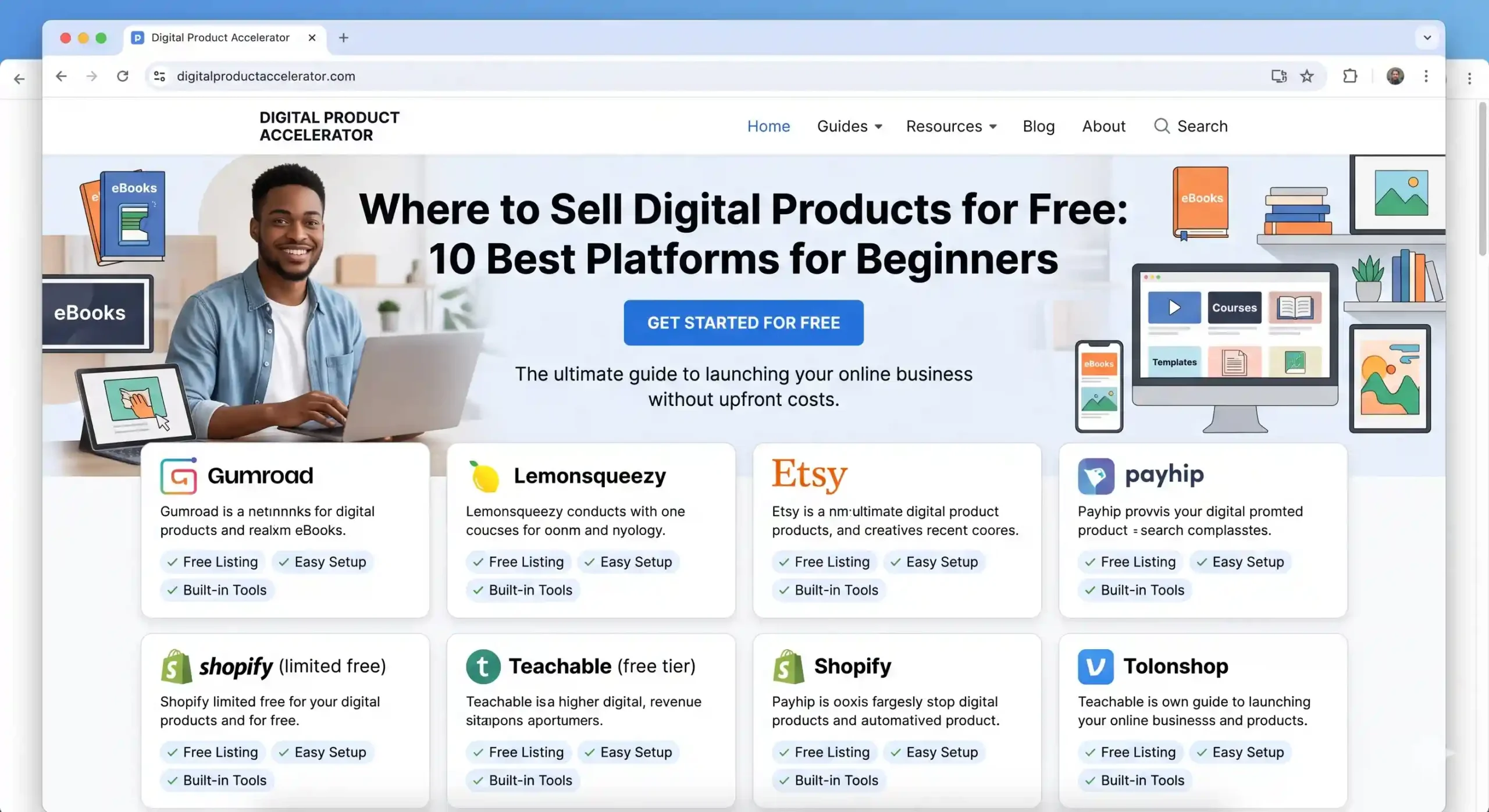
You’ve created a digital product. Maybe it’s an ebook, a Canva template, or a Notion dashboard. Now comes the big question every beginner gets stuck on: where to sell digital products for free — without paying monthly fees, setup costs, or hidden charges?
Here’s the good news: in 2026, you can launch and sell digital products on multiple platforms without spending a single dollar upfront. Many take only a small percentage when you actually make a sale — meaning zero risk to start.
In this guide, you’ll discover the 10 best free platforms to sell digital products, which one fits your product type, and how to use them to build a real passive income stream of $50–$200 a day.
My Best Recommended & Proven Way to Make $50-$100 Daily – Watch This FREE Video to START >>>
What Does “Free to Sell” Actually Mean?
A “free” selling platform is one where you can list and sell digital products without paying any monthly subscription, listing fee, or upfront cost. Most free platforms instead take a small commission per sale (usually 5%–15%).
This is the perfect model for beginners because you only pay when you earn. There’s zero financial risk and no monthly pressure to make sales just to break even.
Key insight: “Free” doesn’t always mean zero fees. It means zero upfront cost. Always check the per-sale commission before choosing a platform.
Why Free Platforms Matter for Beginners
If you’re just starting out and want to make money online, free platforms remove every excuse to delay. Here’s why they’re a game-changer:
- Zero upfront investment. Test your product idea without losing money.
- Built-in buyer traffic. Marketplaces like Etsy already have millions of active shoppers.
- No tech skills needed. Most platforms handle hosting, payments, and file delivery automatically.
- Risk-free experimentation. Try multiple product types and niches without commitment.
- Real passive income potential. Many sellers earn $50–$200 per day on free platforms alone.
You don’t need Shopify or a $30/month website builder to start. You need the right free platform matched to your product.
Top 10 Free Platforms to Sell Digital Products
Here’s a side-by-side comparison of the best free platforms in 2026, organized by what they’re best for:
| Platform | Best For | Fees | Built-in Traffic |
|---|---|---|---|
| Gumroad | Ebooks, courses, templates | 10% per sale (no monthly fee) | Low |
| Etsy | Printables, planners, templates | $0.20 listing + 6.5% fee | High |
| Payhip | Ebooks, memberships, courses | 5% per sale (free plan) | Low |
| Ko-fi | Creators, art, small downloads | 0% on free plan | Medium |
| Stan Store | Social media sellers | Free starter plan available | Depends on your audience |
| Sellfy | Templates, prints, merch | 0% transaction fees (free trial) | Low |
| Lemon Squeezy | SaaS, courses, ebooks | 5% + 50¢ per sale | Low |
| Creative Market | Design assets, fonts, templates | 40%–60% commission | High |
| Itch.io | Games, indie digital art | Pay-what-you-want commission | Medium |
| Podia | Courses, communities | Free plan available (8% fee) | Low |
Let’s break down each one so you can choose the right fit.
My Best Recommended & Proven Way to Make $50-$100 Daily – Watch This FREE Video to START >>>
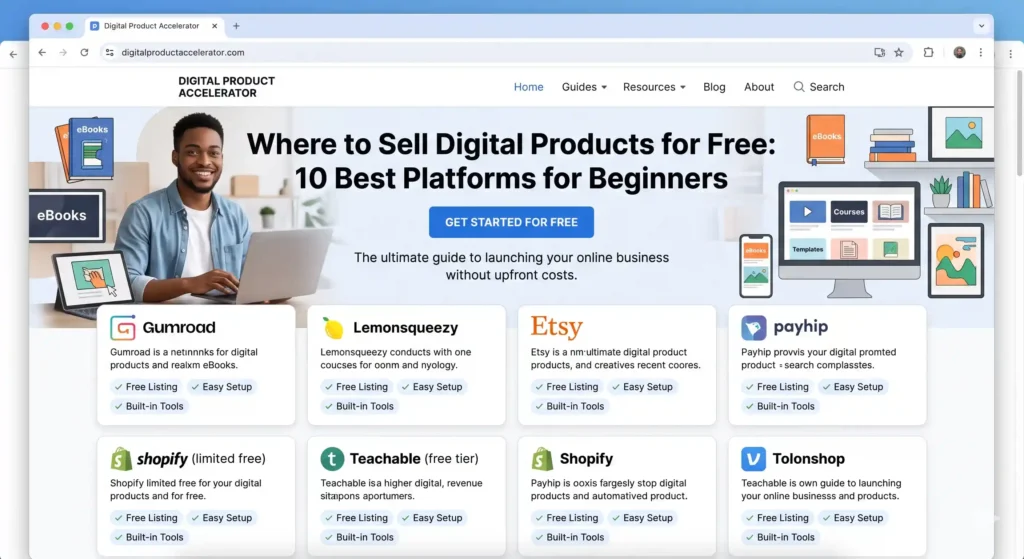
Where to Sell Digital Products for Free: Detailed Breakdown
1. Gumroad — Best All-Rounder for Beginners
Gumroad is the easiest place to start. Sign up, upload your file, set a price, and share the link. Perfect for ebooks, Notion templates, courses, and PDFs.
- Why it’s great: No monthly fees, instant payouts, supports “name your price” pricing.
- Drawback: Low internal traffic — you need to drive your own buyers via social media or Pinterest.
2. Etsy — Best for Built-In Buyer Traffic
Etsy isn’t just for crafts. Digital printables, planners, wedding templates, and Canva designs sell incredibly well here because of Etsy’s massive shopper base.
- Why it’s great: Millions of buyers already searching for digital downloads.
- Drawback: $0.20 listing fee + 6.5% transaction fee. Still effectively free to start with one or two listings.
3. Payhip — Best Free Plan with Marketing Tools
Payhip offers a true free plan (5% fee per sale) with built-in coupon codes, affiliate programs, and email marketing — features most platforms charge extra for.
- Why it’s great: Powerful marketing tools at zero monthly cost.
- Drawback: Smaller community than Gumroad.
4. Ko-fi — Best for Creators and Tip-Based Selling
Originally a “buy me a coffee” tool, Ko-fi now supports digital downloads, memberships, and commissions — with 0% fees on its free plan.
- Why it’s great: Truly free. Great for artists, writers, and creators with a small loyal audience.
- Drawback: Less professional checkout experience for business-style products.
5. Stan Store — Best for Instagram & TikTok Sellers
If your traffic comes from social media, Stan Store gives you a simple “link in bio” storefront with digital product checkout. Free starter plan available.
- Why it’s great: Built specifically for creators selling to their followers.
- Drawback: Limited customization compared to dedicated stores.
6. Sellfy — Best for Multi-Product Stores
Sellfy supports digital files, print-on-demand, and subscriptions in one storefront. Offers a free trial and 0% transaction fees on paid plans.
- Why it’s great: Clean design, supports multiple product types in one place.
- Drawback: Only the trial is fully free; long-term use requires a paid plan.
7. Lemon Squeezy — Best for SaaS, Software, and Modern Creators
A newer platform popular with developers and modern creators. Handles taxes (VAT/GST) automatically as a “merchant of record.”
- Why it’s great: Handles global tax compliance for you — huge for international sellers.
- Drawback: 5% + $0.50 per transaction is slightly higher than competitors.
8. Creative Market — Best for Designers and Asset Sellers
If you make fonts, mockups, graphics, or design assets, Creative Market has an audience that actively pays for premium design files.
- Why it’s great: High-intent buyers willing to pay $20–$50 per file.
- Drawback: Takes 40%–60% commission. Listings must pass design review.
9. Itch.io — Best for Indie Games and Digital Art
A community-driven platform where creators set their own commission rate — even 0%. Hugely popular for indie game devs, pixel artists, and zine creators.
- Why it’s great: You choose how much commission to share. Built-in indie audience.
- Drawback: Niche audience focused on games and art.
10. Podia — Best for Online Courses and Communities
Podia’s free plan lets you build a creator storefront, sell digital downloads, and even host a community. 8% transaction fee on the free plan.
- Why it’s great: All-in-one platform for courses, downloads, and memberships.
- Drawback: Higher fee than Gumroad or Payhip.
How to Choose the Right Free Platform
Don’t list on all 10 at once. Pick one platform that matches your product type and traffic source, then expand later. Use this simple matching guide:
- Ebooks or PDF guides? → Start with Gumroad or Payhip.
- Printables, planners, Canva templates? → Start with Etsy (built-in traffic is worth the small fee).
- Online courses? → Start with Podia or Gumroad.
- You already have a social media audience? → Start with Stan Store or Ko-fi.
- Indie games or digital art? → Start with Itch.io.
- Design assets, fonts, graphics? → Start with Creative Market.
Common Mistakes to Avoid
- Listing on 5 platforms before making one sale. Master one platform first. Spreading thin kills momentum.
- Choosing the cheapest platform over the right platform. A 0%-fee platform is useless if no one shops there. Pay 6.5% on Etsy and get actual buyers.
- Ignoring SEO inside the platform. Etsy, Gumroad, and Creative Market all have internal search. Use keywords in your titles and tags.
- Forgetting to drive external traffic. Pinterest, Reels, and TikTok are free — use them to feed your store.
- Not reading the payout terms. Some platforms hold your money for 7–30 days. Know this before you depend on the income.
Pro Tips for Faster Sales
- Cross-list on two platforms strategically. For example: Etsy for discovery + Gumroad for your own audience. Same product, two income streams.
- Use Pinterest as a free traffic engine. Every digital product seller earning $100+ a day uses Pinterest. It’s the closest thing to “free SEO” for digital downloads.
- Optimize your product titles like Google searches. “Minimalist Budget Planner PDF Printable for Monthly Bills” beats “Budget Planner.”
- Add a freebie to capture emails. Most free platforms let you offer free downloads. Use them to build your email list, then promote paid products later.
- Bundle products to increase your average order value. Combine three $9 templates into a $19 bundle. Same buyer, double the revenue.
Shareable Insights (For LinkedIn, Twitter & Medium)
Insight 1 (LinkedIn): “The biggest myth about selling digital products is that you need a website. You don’t. You need a free platform, a useful product, and one consistent traffic strategy. That’s the entire formula.”
Insight 2 (Twitter/X): “You don’t need to invest in Shopify, ads, or fancy tools to sell digital products. Gumroad + Pinterest + one good product = your first $100/day.”
Insight 3 (Medium): “Free platforms aren’t ‘lesser’ platforms. They’re how nearly every successful digital creator started. Stop overthinking the tools. Start selling.”
My Best Recommended & Proven Way to Make $50-$100 Daily – Watch This FREE Video to START >>>
Frequently Asked Questions
What is the best free platform to sell digital products?
Gumroad is the best free platform for most beginners — no monthly fees, instant payouts, and easy setup. If you want built-in buyer traffic, Etsy is the best free-to-start marketplace despite its small per-listing fee.
Can I really sell digital products for free with no upfront cost?
Yes. Platforms like Gumroad, Payhip, Ko-fi, and Podia let you sign up, upload a product, and start selling without paying anything upfront. They only take a small percentage when you make a sale.
Which free platform has the most built-in buyer traffic?
Etsy has by far the most active buyer traffic for digital downloads — millions of shoppers search there daily. Creative Market is second for designers. Gumroad and Payhip have less internal traffic, so you’ll need to promote externally.
Is Gumroad really free to use?
Gumroad has no monthly fees and no listing fees. It only takes a 10% commission on each sale. So if you sell nothing, you pay nothing. If you sell $100, you keep $90.
How much money can I make on free digital product platforms?
Most beginners earn $50–$200 per day within their first 3–6 months on free platforms. Top sellers on Etsy and Gumroad earn $5,000–$20,000 per month. Your earnings depend on your traffic strategy and product quality.
Do I need a website to use free selling platforms?
No. All the platforms listed in this guide host your product page for you. You just share the link via social media, Pinterest, your bio, or your email list.
Can I sell on multiple free platforms at the same time?
Yes, and many successful sellers do. The most common combo is Etsy + Gumroad — Etsy for discovery, Gumroad for your loyal audience. Just make sure you can manage updates across listings.
Conclusion: Pick One Platform and Start Today
You don’t need money, a website, or experience to start selling digital products. You just need to pick the right free platform and start.
If you’re still unsure, here’s the simplest action plan:
- If you have no audience yet → list on Etsy (let their traffic find you).
- If you have even a small audience → list on Gumroad or Payhip.
- If you have a social media following → use Stan Store or Ko-fi.
The “perfect” platform doesn’t exist. The platform you actually use does.