Scroll through any affiliate marketing forum and you’ll see the same overwhelming list: link trackers, email platforms, keyword tools, landing page builders, analytics dashboards — the list never ends.
If you’re just starting out, it’s easy to assume you need all of it on day one. You don’t.
This guide breaks down exactly which affiliate marketing tools actually matter for beginners, the real difference between free vs paid affiliate tools, and how to build a simple tech stack for your online business without draining your budget before you’ve made a single sale.
Uncover My Top Recommendation for Making $100-$300 Daily – Check Out This FREE Video to Begin >>>
What Are Affiliate Marketing Tools?
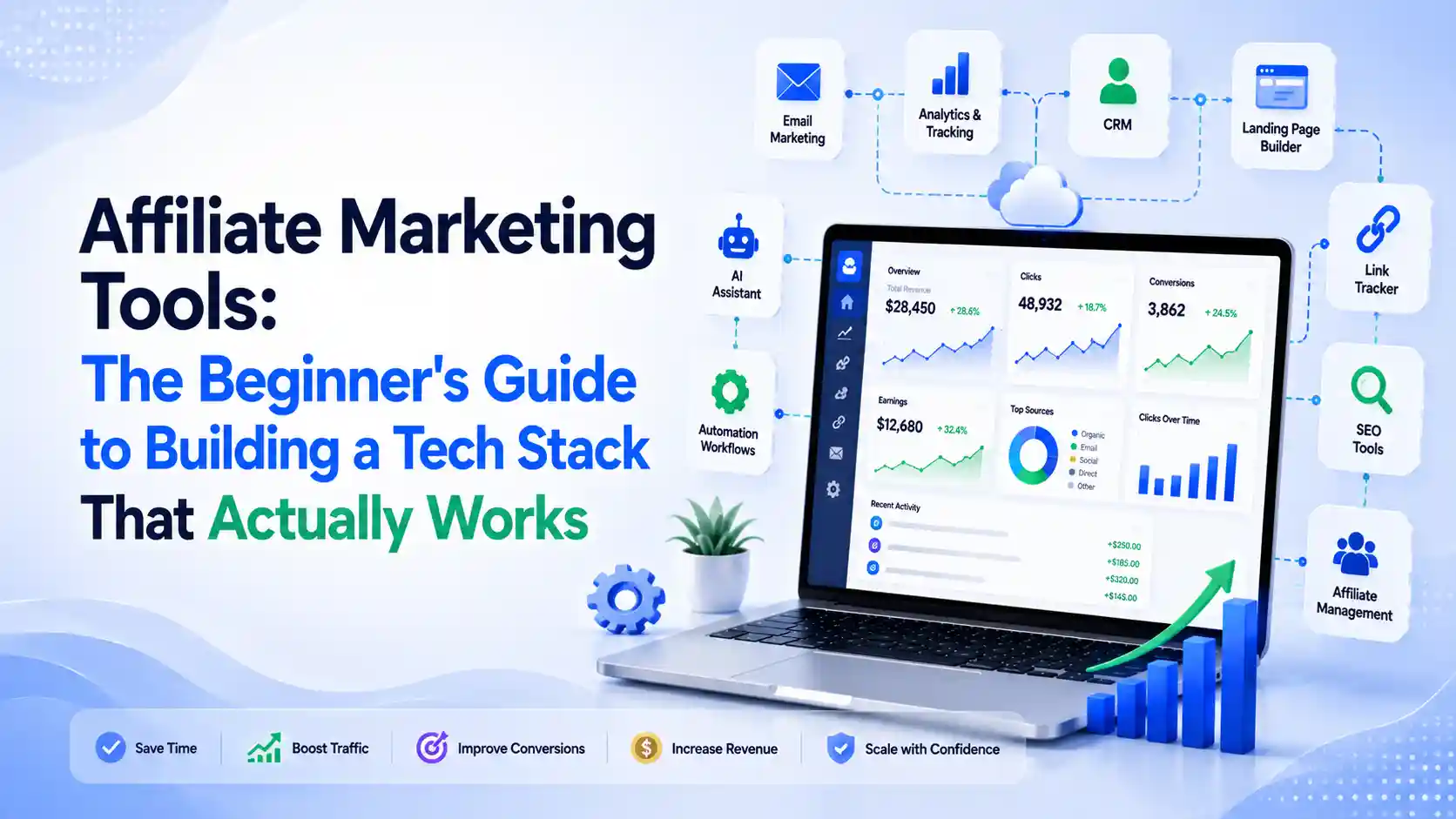
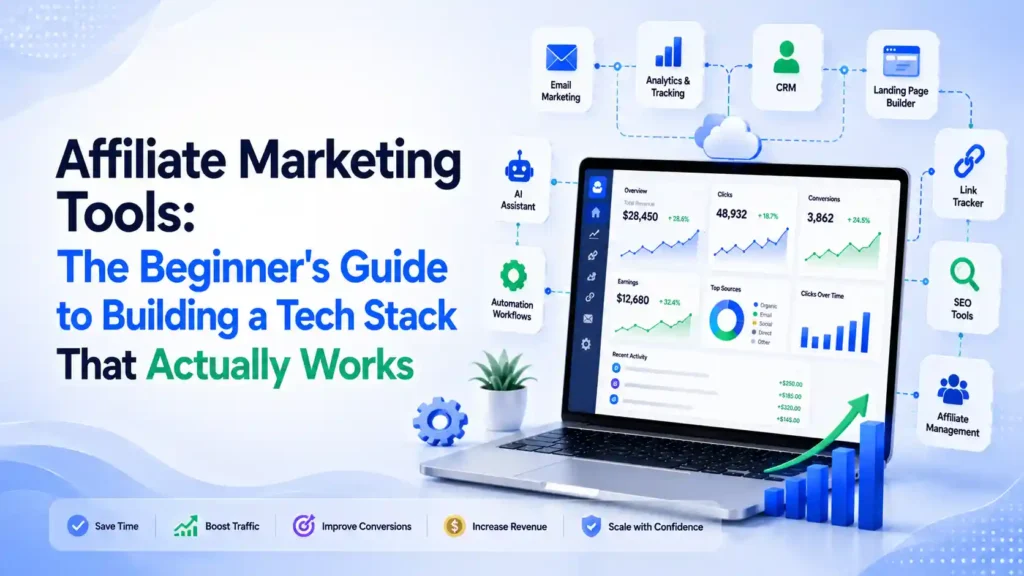
Affiliate marketing tools are software platforms that help you manage the moving parts of promoting products as an affiliate — from creating links, to tracking clicks, to growing an audience that actually buys.
Most beginners eventually need tools that fall into a few core categories:
- Link management tools, for cleaning up and tracking affiliate URLs
- Email marketing tools, for nurturing an audience over time
- Content or SEO tools, for finding what your audience is actually searching for
- Analytics tools, for understanding what’s converting and what isn’t
- Landing page or website tools, for hosting your content and offers
You don’t need one of everything right away. You need the right one for the stage you’re actually at.
Why the Right Tools Matter (Especially for Beginners)
New affiliates often make one of two mistakes: they buy every tool they see recommended, or they avoid tools altogether and try to do everything manually.
Here’s why building the right tech stack for your online business matters early on:
- It saves time. The right tool automates repetitive tasks so you can focus on content and strategy instead of busywork.
- It prevents costly guesswork. Tools like tracking software show you what’s actually working, instead of leaving you to guess.
- It protects your budget. Knowing which tools are worth paying for — and which free versions are good enough — keeps you from overspending before you’re earning consistently.
- It builds a foundation that scales. The systems you set up now will carry you as your traffic and income grow, instead of forcing a messy rebuild later.
Step-by-Step: How to Choose Affiliate Marketing Tools as a Beginner
You don’t need to figure this out through trial and error. Follow this order instead.
Step 1: Start With Link Management
Before anything else, get a simple tool to clean up and track your affiliate links. This single tool gives you visibility into what’s actually driving clicks, which shapes every decision that comes after it.
Step 2: Add Basic Analytics
Once your links are trackable, connect a straightforward analytics tool to see where your traffic is coming from and how visitors behave once they land on your content.
Step 3: Choose One Content Platform
Whether it’s a blog, a YouTube channel, or a social platform, pick one primary place to publish consistently before spreading across five platforms at once. Trying to maintain everything early on usually means maintaining nothing well.
Step 4: Introduce Email Marketing Early
Even a free-tier email tool lets you start building a list from day one. Traffic comes and goes, but an email list is one of the few assets you fully own and can return to repeatedly.
Step 5: Layer in SEO or Keyword Tools
Once you’re publishing consistently, a basic keyword research tool helps you create content people are actually searching for, rather than guessing at topics.
Step 6: Upgrade Only When a Free Tool Genuinely Limits You
This is the step most beginners skip. Only move from a free tool to a paid one when you’ve hit a real limitation — not because a paid version simply exists.
Uncover My Top Recommendation for Making $100-$300 Daily – Check Out This FREE Video to Begin >>>
Free vs Paid Affiliate Tools: How to Decide
This is one of the biggest points of confusion for beginners, so let’s simplify it.
Free tools are usually the right starting point when you’re still testing an idea, building your first audience, or haven’t made consistent sales yet.
Most beginners can run link tracking, basic email marketing, and simple analytics entirely on free plans for months.
Paid tools earn their place once a specific limitation is actually costing you time or money.
For example, upgrading an email tool makes sense once your list grows past a free-tier limit, or upgrading a tracking tool makes sense once you need deeper conversion data across multiple campaigns.
A good rule of thumb: if a free tool is limiting your growth in a way you can clearly point to, upgrading is worth it. If you’re upgrading just because a tool looks more professional, it can usually wait.
Common Mistakes Beginners Make With Affiliate Marketing Tools
- Buying tools before building an audience. Tools amplify a strategy — they don’t replace the need for one.
- Collecting overlapping tools. Many beginners end up paying for two or three tools that all do the same basic job.
- Choosing paid tools out of fear of missing out. A tool’s popularity doesn’t mean it fits your current stage.
- Ignoring free tiers entirely. Many free vs paid affiliate tools comparisons show that free versions cover 90% of what a true beginner actually needs.
- Never revisiting the stack. As your business grows, the tools that served you at the start may no longer fit — and that’s normal, not a failure.
Pro Tips for Building a Smarter Affiliate Tech Stack
Keep your stack as small as possible for as long as possible. A lean stack is easier to manage, cheaper to run, and forces you to master fewer tools instead of dabbling in many.
When comparing tools, prioritize the ones that integrate well with each other, since a tech stack for your online business works best when your link tracker, email platform, and analytics tool can share data smoothly.
Set a simple rule for yourself: no new tool unless it solves a problem you’re currently experiencing, not one you might have someday.
Revisit your tools every few months and cancel anything you haven’t logged into recently — subscription creep quietly drains far more budget than most beginners realize.
Finally, remember that the tools every affiliate needs early on are rarely the most advanced ones on the market — they’re the simplest ones you’ll actually use consistently.
FAQs
1. What are the best tools for affiliate marketers just starting out?
Beginners typically need a link management tool, basic analytics, one content platform, and an email marketing tool — advanced tools can wait until these fundamentals are in place.
2. Should I choose free vs paid affiliate tools when I’m just starting?
Start free wherever possible. Upgrade to paid tools only once a specific limitation is clearly slowing your growth or costing you sales.
3. How much should a beginner spend on a tech stack for an online business?
Many beginners can start for little to nothing using free plans, while a more complete beginner tech stack with a few paid upgrades often lands in the $200–$400 per year range.
4. What tools does every affiliate really need?
At minimum, most affiliates need a way to track links, analyze traffic, publish content consistently, and build an email list — everything else is optional early on.
5. Do I need a website to use affiliate marketing tools?
Not necessarily. Many tools work well with social platforms or link-in-bio pages, though a simple website does make managing content and tracking easier long-term.
6. How do I know when to upgrade from a free tool to a paid one?
Upgrade when a free plan is clearly limiting something specific — like an audience size cap or missing tracking data — rather than upgrading based on features you’re not yet using.
7. Can I run affiliate marketing with only free tools?
Yes, especially in the early stages. Many successful affiliates start entirely on free tools and only introduce paid options once their traffic and income justify it.
Uncover My Top Recommendation for Making $100-$300 Daily – Check Out This FREE Video to Begin >>>
Conclusion: Build Your Stack One Tool at a Time
You don’t need a $400 toolkit to start affiliate marketing — you need the right few tools, used consistently, in the right order.
The beginners who succeed aren’t the ones with the most software; they’re the ones who mastered a simple stack before adding complexity.
Start with link tracking, add analytics, pick one platform, and grow your email list from day one.
Ready to build a tech stack that actually earns its keep? Choose one tool from this guide, set it up this week, and add the next only once you’ve outgrown what you have.