Create and sell online course income has become one of the friendliest ways for beginners to turn what they already know into real money.
You don’t need a film crew, a private studio, or a teaching degree. You need a skill people want to learn, a simple plan to teach it, and the right place to host it.
The best part? You build the course once and sell it again and again. That is why so many first-time creators call it their favorite side hustle.
Let’s walk through the whole thing, from your first idea to your first sale.
Uncover My Top Recommendation for Making $100-$300 Daily – Check Out This FREE Video to Begin >>>
What Does It Mean to Create and Sell an Online Course?
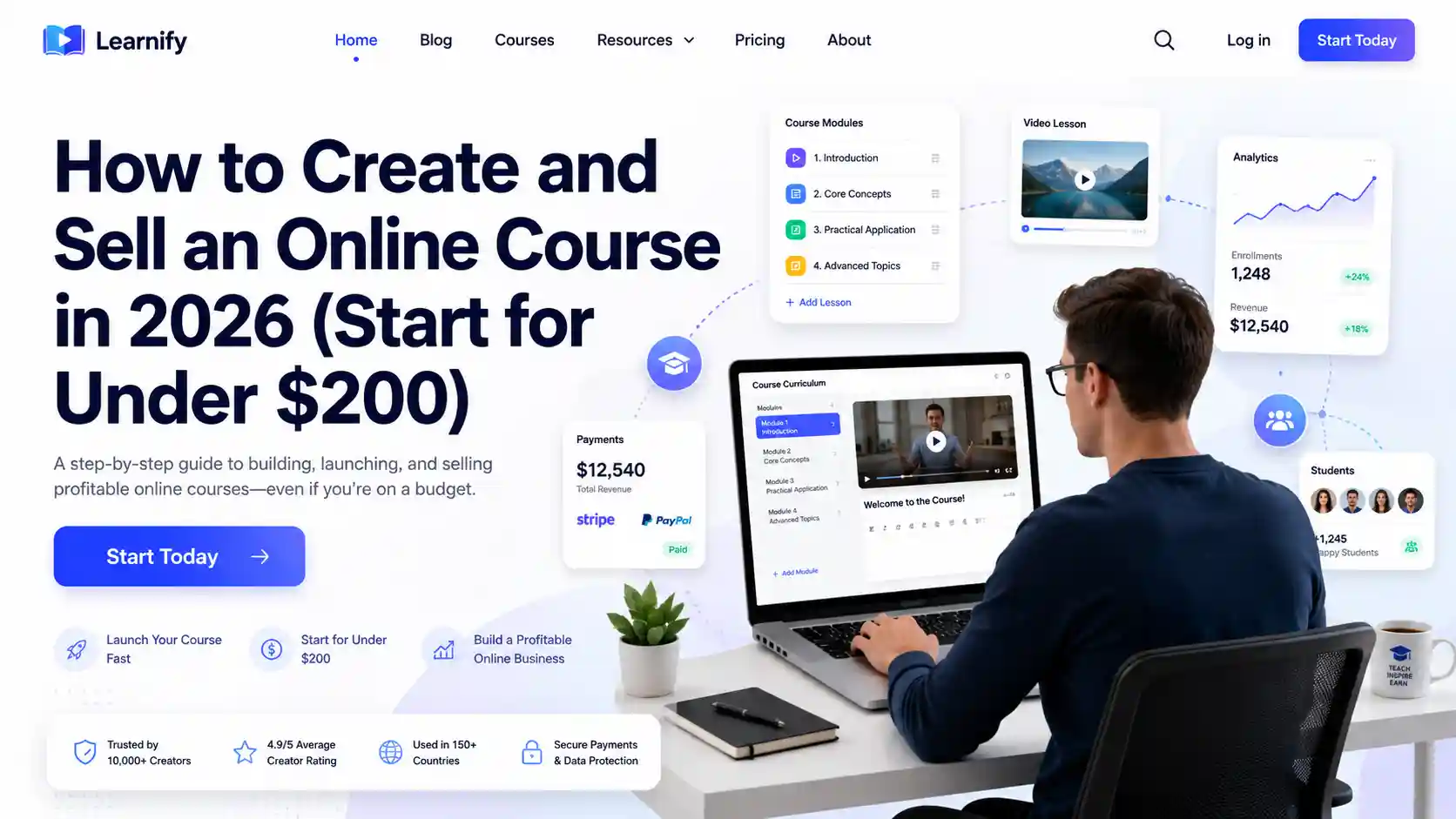
An online course is a set of lessons, usually short videos plus a few worksheets or quizzes, that teaches one clear skill or result. You upload it to a course platform, set a price, and students pay to get access.
In one line: to create and sell an online course means packaging what you know into video lessons and charging people to learn from them online.
Courses come in a few shapes:
- Self-paced courses: students watch on their own schedule (the most common type).
- Cohort courses: a group starts and finishes together, often with live calls.
- Mini-courses: short, cheap courses that solve one small problem fast.
- Membership courses: ongoing lessons people pay for monthly.
Why Selling Online Courses Is Worth Your Time in 2026
The demand is huge and still growing.
The online education market is on track to reach about $222 billion in 2026, according to Statista, and the wider e-learning industry keeps expanding near 20% a year, based on figures from Grand View Research.
More people than ever are happy to pay to learn a new skill online.
Here is why beginners love this model:
- Low startup cost. Most people launch with tools that run about $50 to $200 a month.
- Sell while you sleep. One recording can earn money for years.
- You already have the knowledge. Cooking, spreadsheets, guitar, coding, parenting tricks: someone wants to learn it.
- It builds trust. A good course turns you into the go-to person in your topic.
How to Make an Online Course, Step by Step
Here is the simple path from blank page to paying students.
Step 1: Pick a course idea that sells
Start with a skill you can teach and that people actually pay to learn. The best course ideas that sell solve a clear problem with a clear result.
Hot topics that keep selling in 2026 include:
- AI tools and prompt writing
- Digital marketing and short-form video
- Coding and no-code app building
- Personal finance and beginner investing
- Fitness, yoga, and healthy cooking
- Graphic design and Canva
- Photography and video editing
- Freelancing and side income
Step 2: Check that people want it
Before you record a single lesson, make sure buyers exist. Search your topic on Google, YouTube, Reddit, and course sites. If people ask questions and other creators already sell on it, that is a green light, not a reason to quit. Competition means money is changing hands.
Step 3: Outline your lessons
Break the skill into small wins. A tidy outline looks like this: a short intro, then 4 to 8 modules, with 3 to 5 quick lessons in each. Keep every video under 10 minutes so students stay hooked and finish.
Step 4: Record simple lessons
You do not need pro gear. A recent phone, a $30 mic, and natural light will do. Record your screen for how-to steps, or film yourself talking. Done beats perfect every time.
Step 5: Pick a platform to host and sell it
This is where you compare the best platforms to sell courses. See the table below.
Step 6: Price it right
Beginners often price too low. Most first courses sell well between $50 and $200. Mini-courses can sit at $19 to $49, while deeper programs with support run $200 and up. Charge for the result you deliver, not the number of videos.
Step 7: Launch and promote
Tell your email list, post on LinkedIn and Instagram, and share free tips that point back to the course. A small, warm audience beats a huge cold one.
Uncover My Top Recommendation for Making $100-$300 Daily – Check Out This FREE Video to Begin >>>
Best Platforms to Sell Courses (2026 Pricing)
Each platform has its own strengths. Here is a quick, honest breakdown of what the top 5 cost this year and who each one fits.
Teachable starts at $39 a month on the Starter plan and $89 a month on Builder. The cheapest plan adds about a 7.5% fee on each sale, which falls to 0% once you move up to Builder. It suits a fast, simple first launch.
Thinkific runs $49 a month on Basic and $99 a month on Start, with 0% transaction fees on paid plans. It fits course-first creators who want unlimited courses and no per-sale cut.
Kajabi begins at $179 a month on Basic and charges 0% fees when you use Kajabi Payments. Pick it when you also need email and sales pages built into one spot.
Podia starts at $39 a month on the Mover plan and takes a 5% fee on that tier. It works as a budget all-in-one for beginners.
Udemy is free to publish, but it keeps a large share of each marketplace sale. Use it to test an idea in front of a built-in crowd of millions.
Prices verified in mid-2026. Teachable’s cheapest plan adds a per-sale fee that drops to 0% once you move up a tier, and Kajabi reset its pricing in January 2026, so double-check the current rate before you sign up.
Quick pick for beginners: Start on Teachable Builder or Thinkific Start if you want a clean course setup for under $100 a month. Choose Kajabi only when you also need email marketing and sales pages in one place. Try Udemy if you want to test demand for free, knowing they take a big cut.
Common Mistakes to Avoid
New creators tend to trip on the same rocks. Sidestep these and you are ahead of most:
- Going too broad. “Learn marketing” is fuzzy. “Get your first 1,000 Instagram followers in 30 days” sells.
- Over-recording. A 40-lesson monster scares buyers. A tight 2-hour course finishes and gets reviews.
- Skipping promotion. No one buys a course they never hear about. Marketing is half the job.
- Pricing too cheap. A $9 course feels low-quality to many buyers and barely pays you back.
- No social proof. Without a few reviews or before-and-after results, trust stays low.
- Waiting for perfect. Launch a simple version, then improve it with real student feedback.
Pro Tips to Sell More Courses
Ready to go past the basics? These moves separate hobby creators from sellers who profit.
- Pre-sell before you build. Offer the course at a discount before recording. Real sales prove demand and fund your setup.
- Add a live element. A weekly Q&A call or private group lifts completion rates and lets you charge more.
- Collect proof fast. Ask your first students for short reviews and screenshots. Put them on your sales page.
- Use a free mini-course as bait. A short freebie builds your email list and warms buyers up for the paid one.
- Refresh yearly. Update lessons and dates once a year so your course stays current and keeps ranking.
- Own your email list. Social platforms come and go, but an email list is an audience you control.
Frequently Asked Questions
How much does it cost to create and sell an online course?
Most beginners spend about $50 to $200 a month. That covers a course platform plus a cheap mic. You can start on Udemy for free, though the platform takes a large share of each sale.
What are the best platforms to sell courses?
The top picks for 2026 are Teachable, Thinkific, Kajabi, Podia, and Udemy. Teachable and Thinkific are great for a first launch, Kajabi is best for all-in-one marketing, and Udemy gives you a built-in audience.
What course ideas sell best?
Skills with a clear result sell best: AI tools, digital marketing, coding, personal finance, fitness, design, and freelancing. Pick a topic you can teach and that people already pay to learn.
How do I make an online course with no experience?
Outline the skill into small lessons, record short videos with your phone and a basic mic, upload them to a course platform, set a price, and share it with your audience. Start simple and improve as you go.
How much money can you make selling online courses?
t varies widely. A small creator selling a $100 course to 50 people earns $5,000. Bigger creators with warm email lists earn far more. Your income depends on your topic, price, and promotion, not on luck.
Do I need a big audience to sell a course?
No. You need a small, warm group with the same problem. One hundred people who trust you can beat ten thousand strangers who do not.
How long does it take to create a course?
A focused mini-course can come together in a weekend. A full course usually takes two to four weeks of part-time work, including outlining, recording, and setup.
Uncover My Top Recommendation for Making $100-$300 Daily – Check Out This FREE Video to Begin >>>
Ready to Build Your First Course?
You now have the full plan to create and sell an online course, from picking a topic that sells to choosing the right platform and landing your first buyers.
The market is wide open, the tools are cheap, and your knowledge is already worth paying for.
Your next step: grab one skill you can teach, sketch a 5-lesson outline today, and open a free trial on Teachable or Thinkific.
Your first sale is closer than you think, so start now and let your course earn while you sleep.